Spring 2017
UI/UX DES INV 190
Product + Interaction Design
Project for User Interfaces & User Experience. Team members include Tiffany Kim, Rainy Hernandez, & Stefan Lam.
Body-Storming & Experimental Way-finding
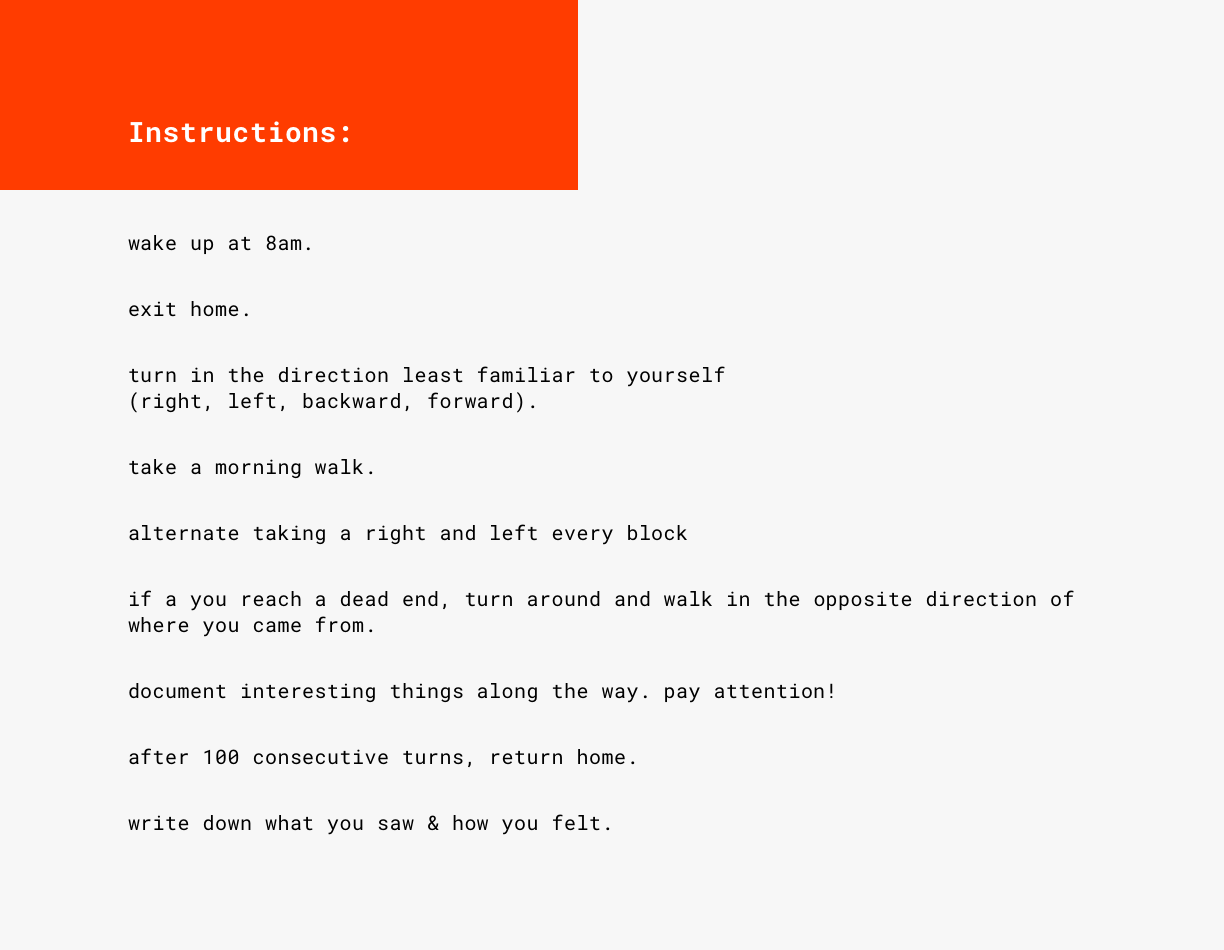
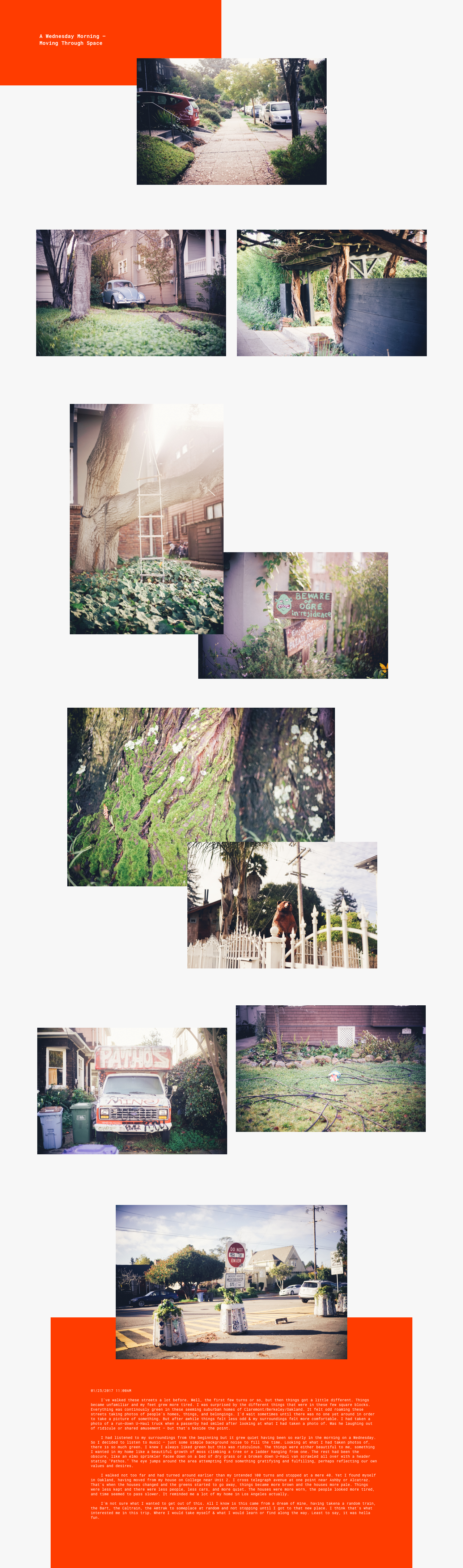
At the beginning of this project, we were assigned to experiment with methods of wayfinding & different facets in body movement. By this we created set of instructions to experience some sense of way-finding & movement within space. For my instructional set I decided to make a set of rules that caused me to explore based on recurring motions that would move me erratically through space. I then summarized the experience in a paragraph.
User Research & User Groups
We then interviewed eight BART users on their transportation habits, their typical train ride from home to point of interest, mental and emotional states throughout the BART journey, interactions within rides, and traveling preferences.
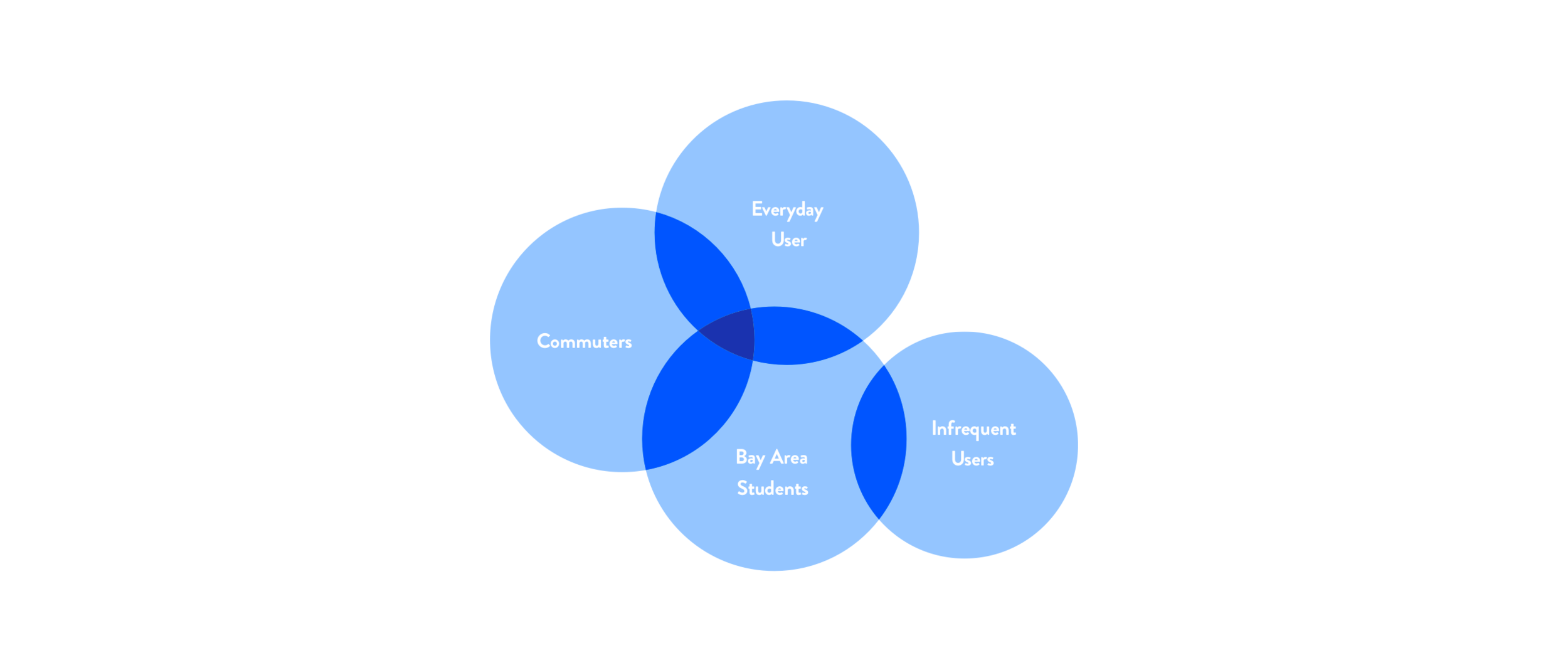
Considering the large pool of people who identified as “Bart Users,” it was essential to break down this label a bit further based on three key attributes: frequency, location, & purpose. We found four overarching categories. Our different user groups overlap in category. In this diagram you can see the overlap between different groups, such that “Everyday Users” can also be a “Commuter” or “Bay Area Student.”
Research Synthesis
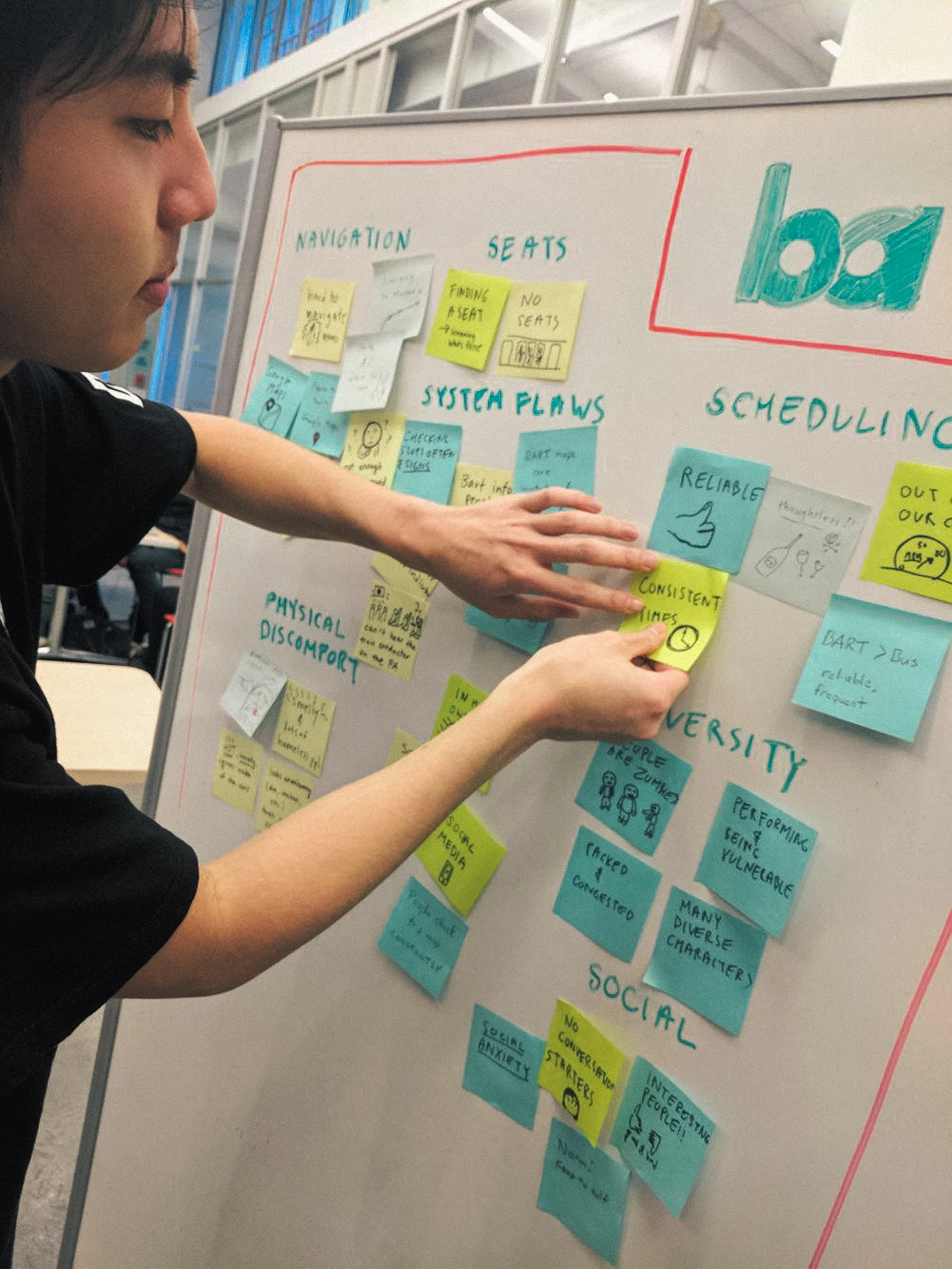
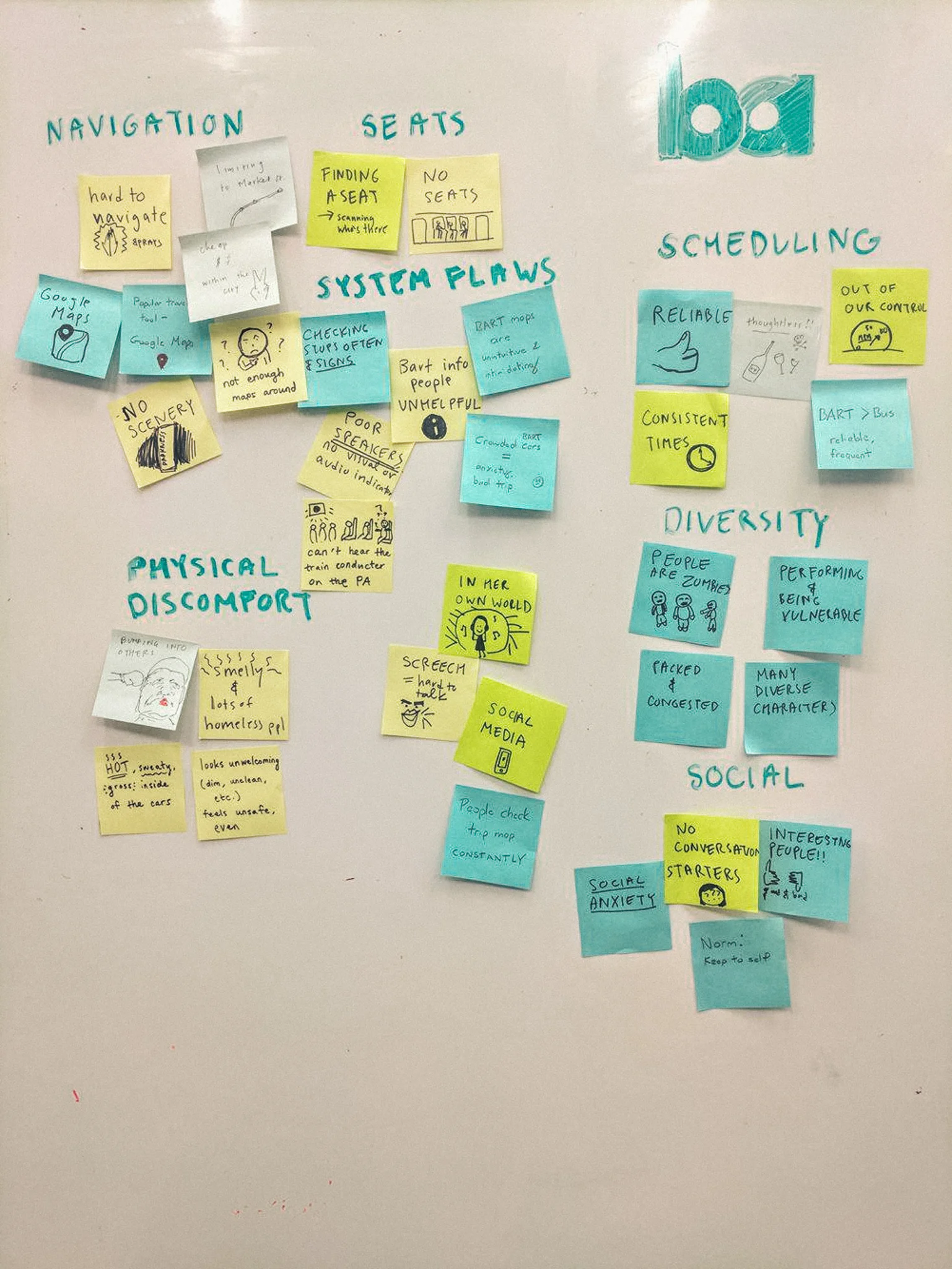
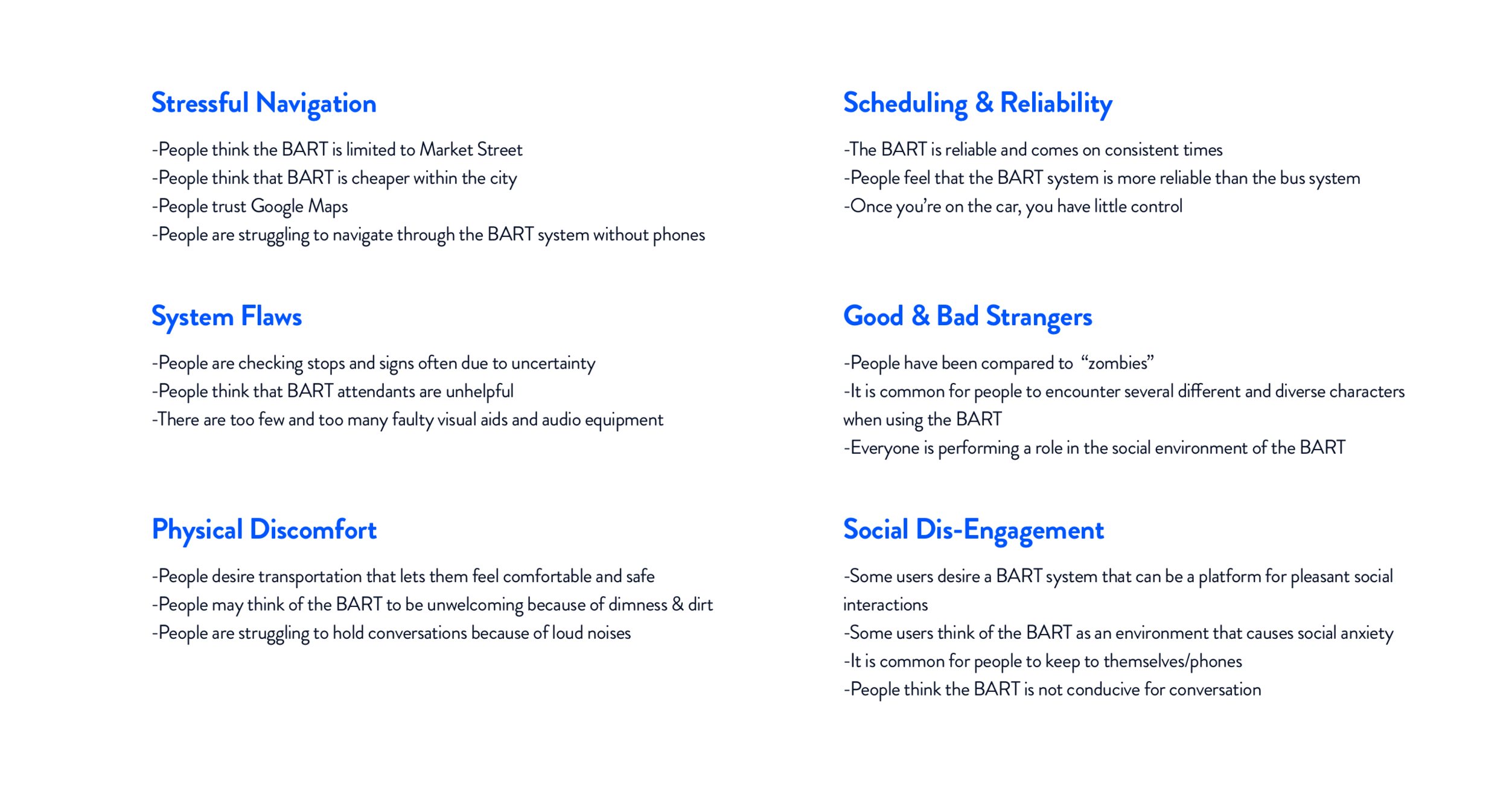
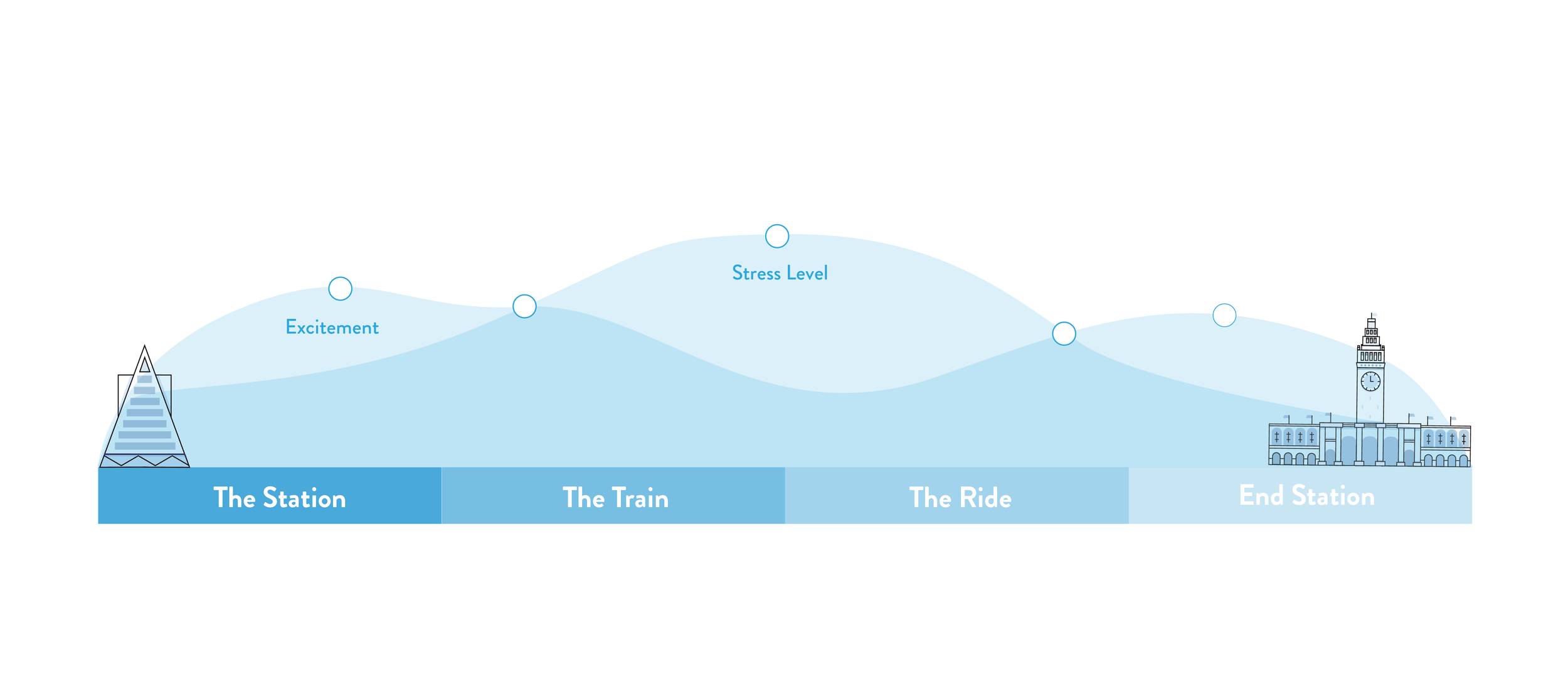
Current User Journey
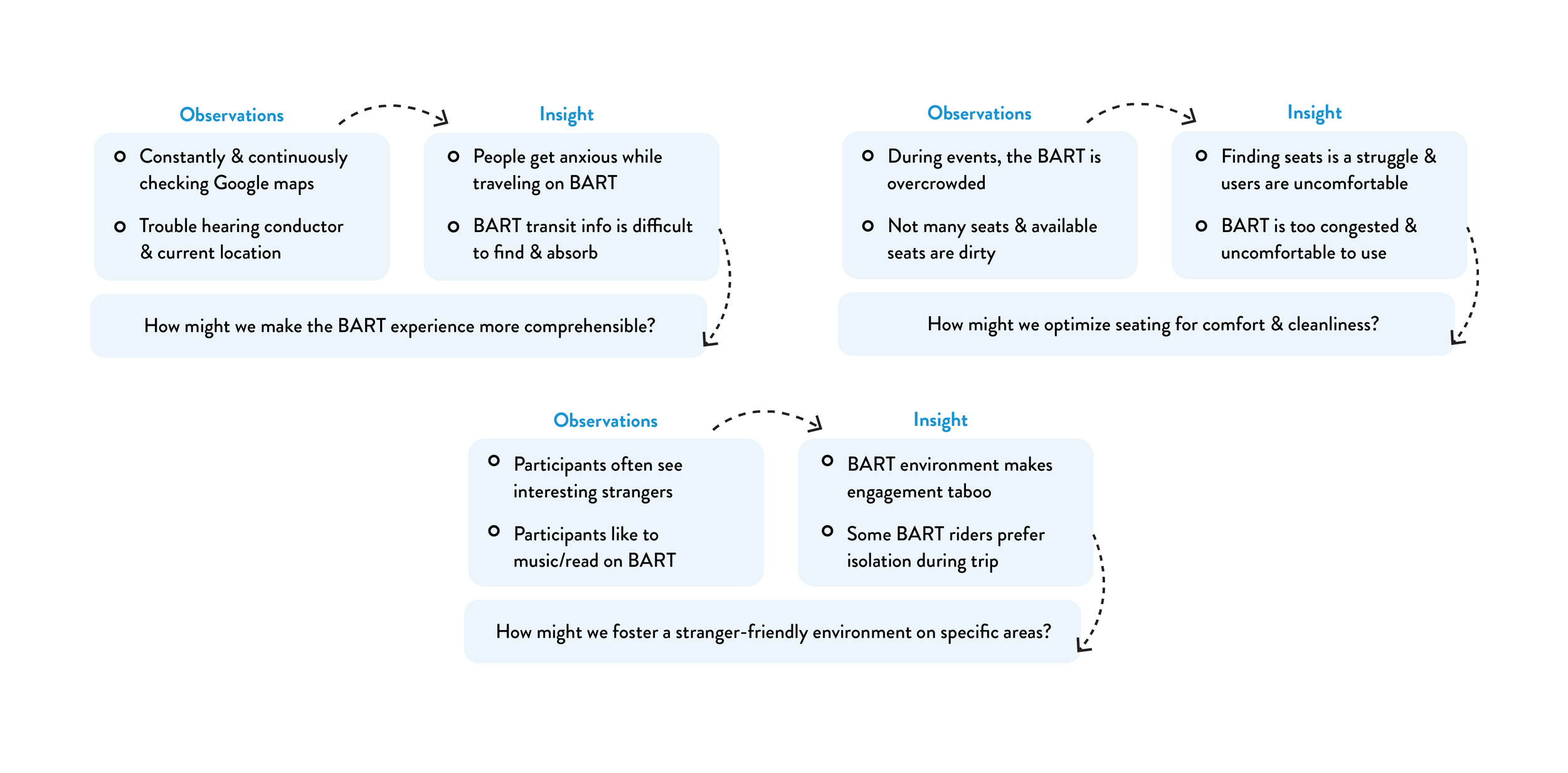
Observations & Insights
Design Focus
BART transit navigation is one of most distressing experiences one can encounter in Bay Area public transit. Navigating the BART system during rush & off hours is one of the most difficult issues for Bay Area Residents. With our project we hoped to make the most frequented public transit system more enjoyable & to help improve the riding experiences to help foster ease of mind, connection, & utility.
BART is an old an outdated system. The Bay Area is expecting an overhaul of the train system in coming years with due excitement. We believe then, it is important to make incremental changes that will affect the nature of BART technological infrastructure transit itself.
Design Opportunities
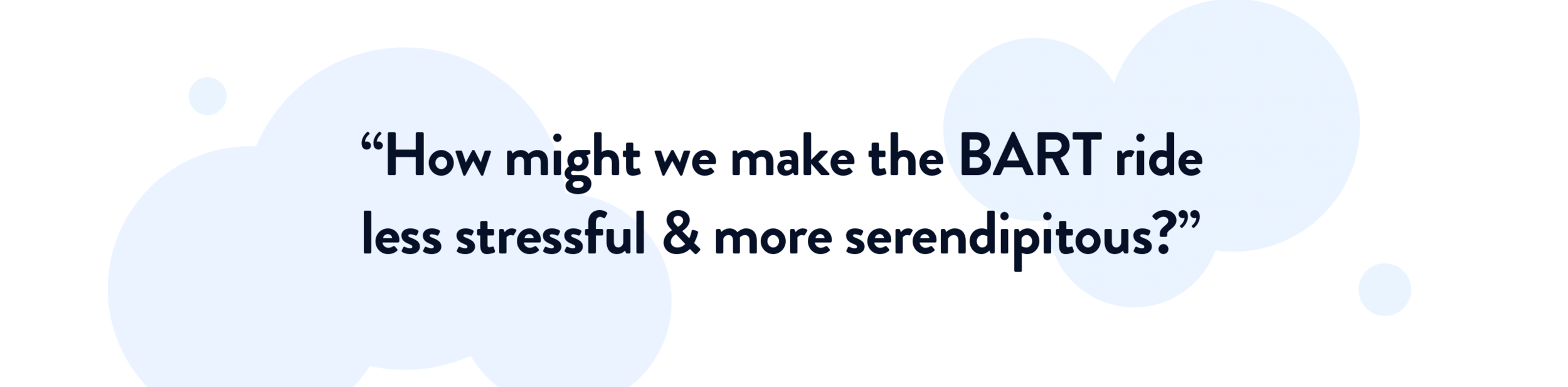
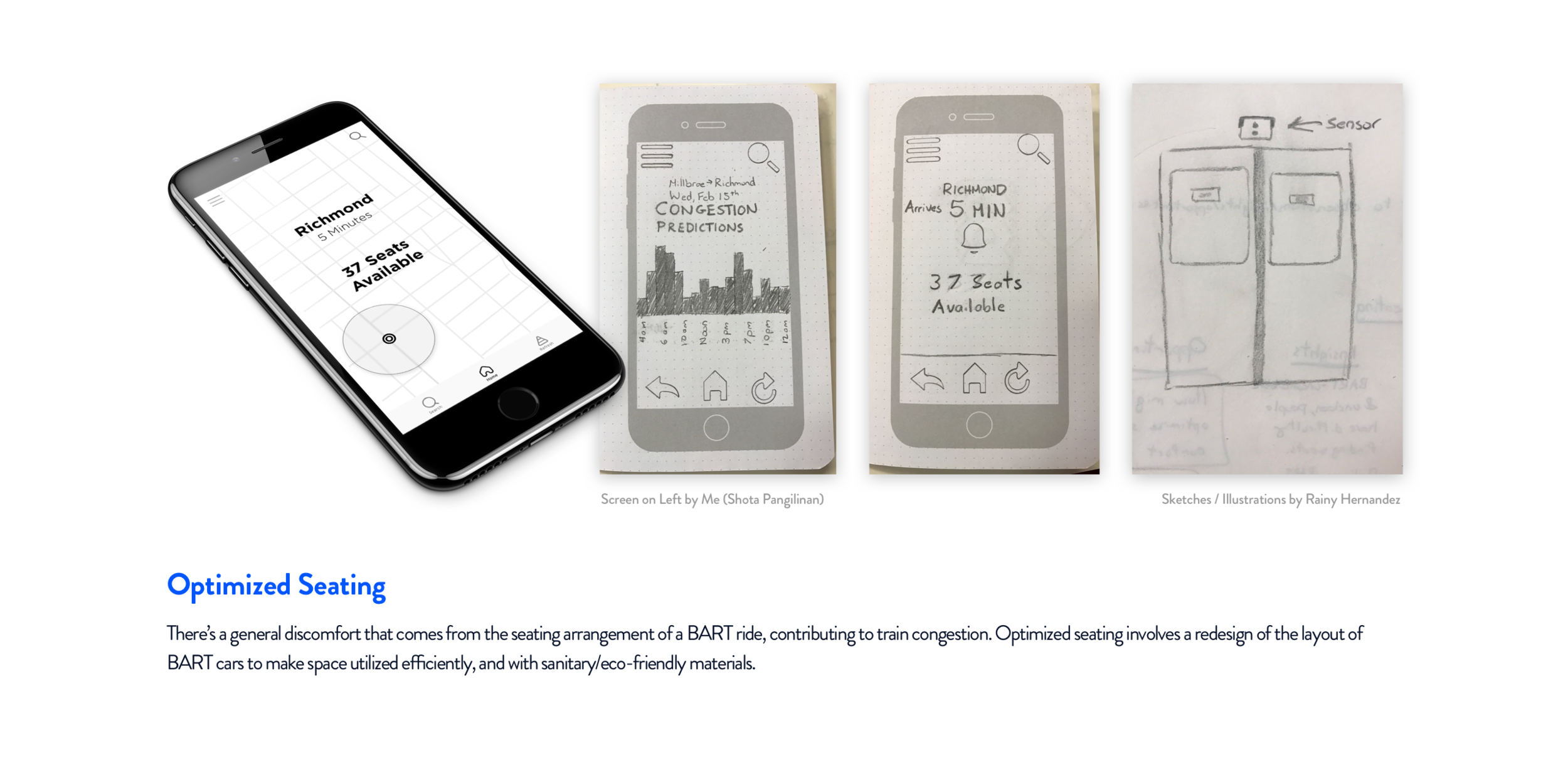
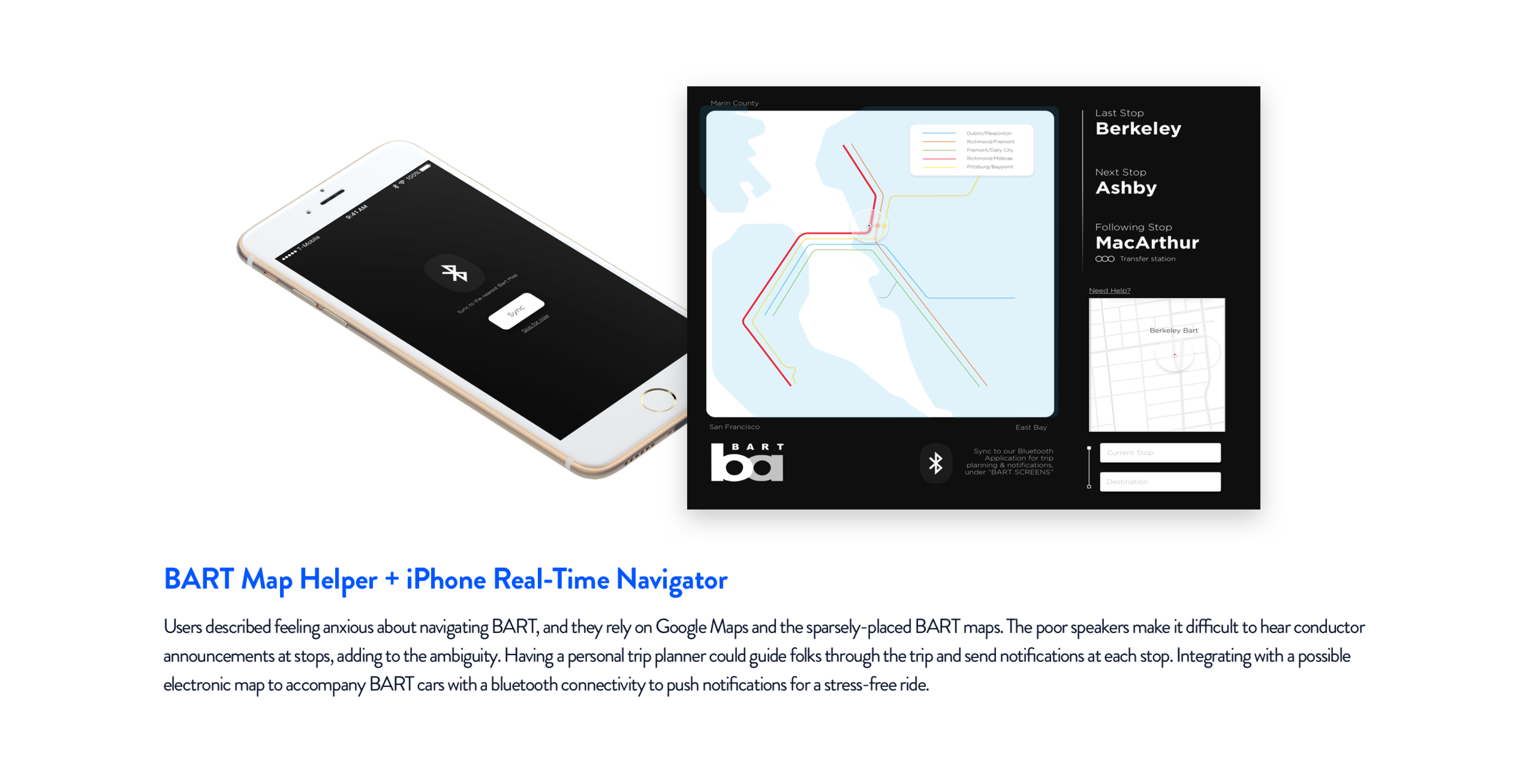
Synthesizing the information from our design ethnography & the insights we gained from our user interviews. We came up with three conceptual solutions. These three concepts aim to tackle the “How Might We” question of making a less stressful & more serendipitous BART experience.
Dividing Bart Cars for Social Purpose
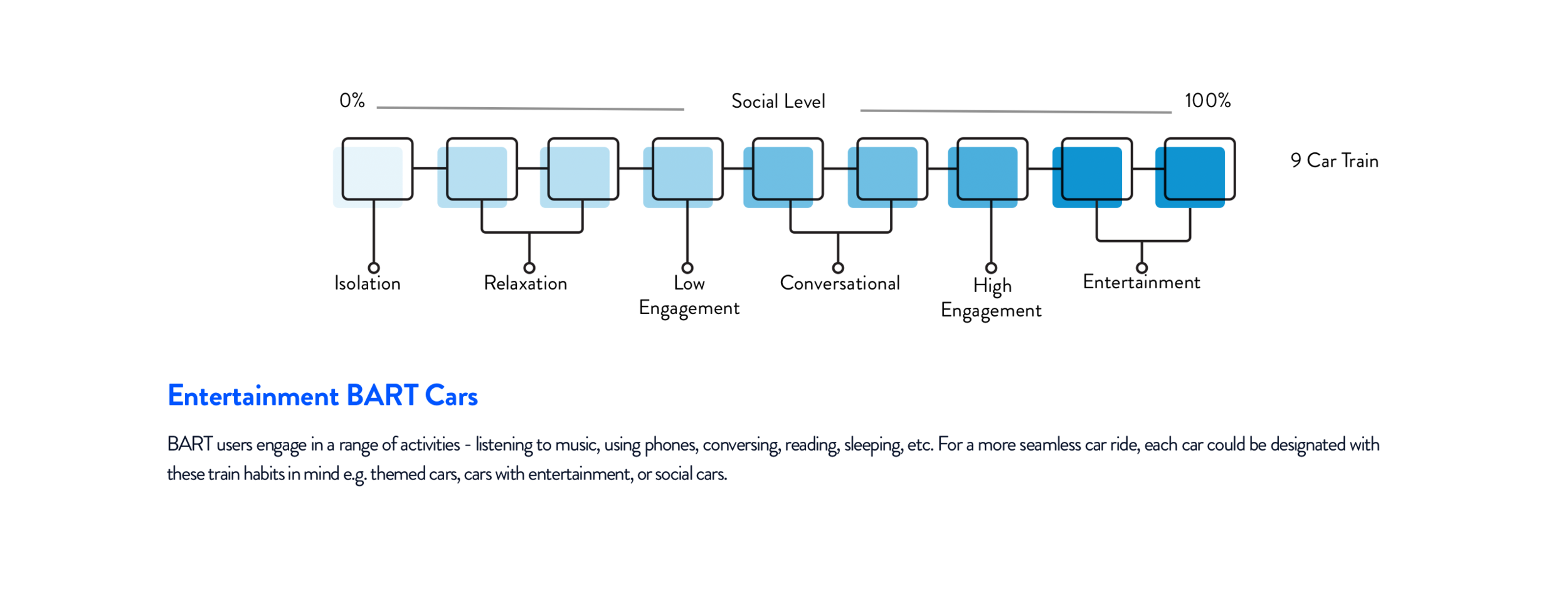
Cart Seating Capacity
Electronic Map & Bluetooth Connectivity
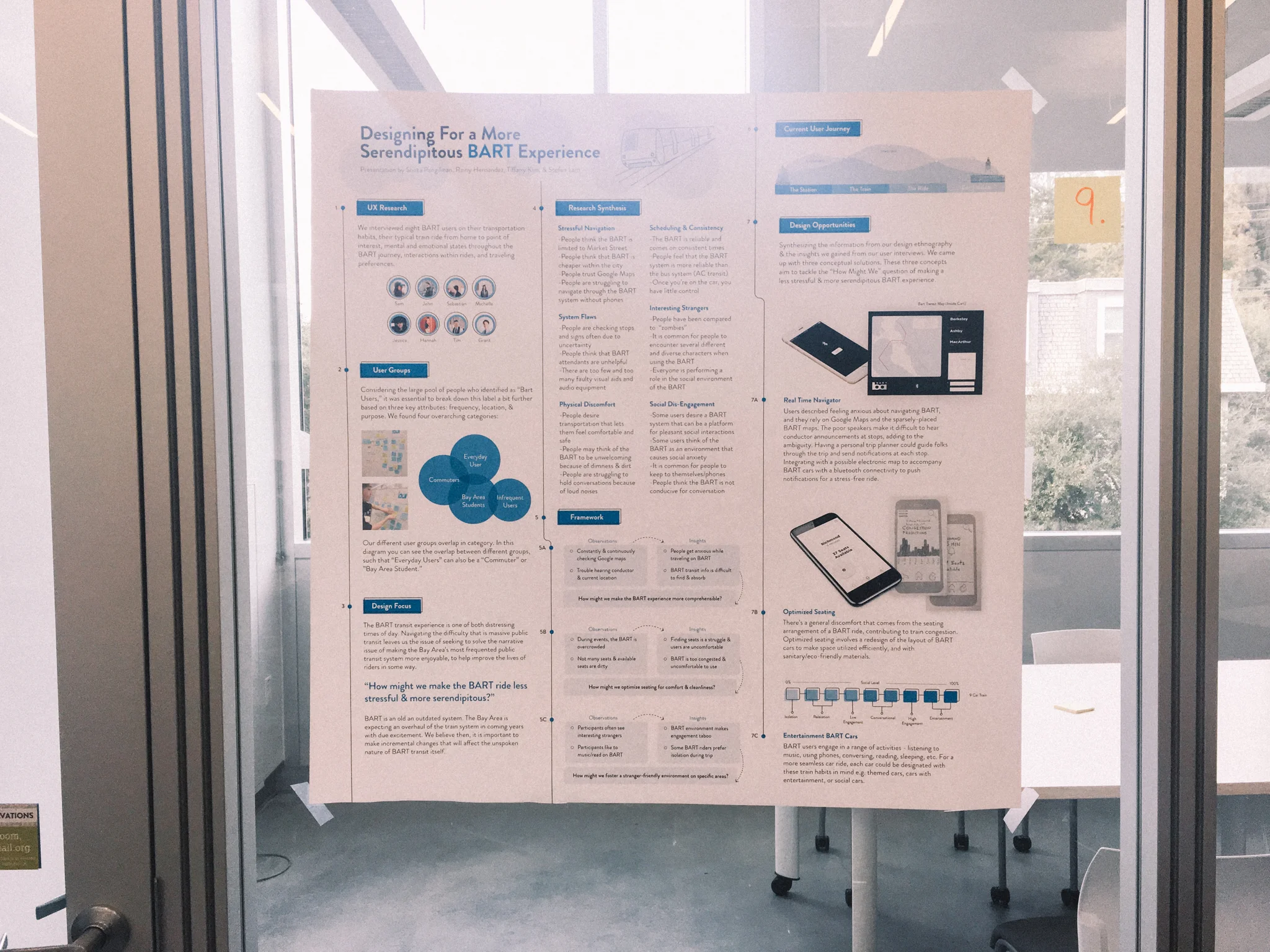
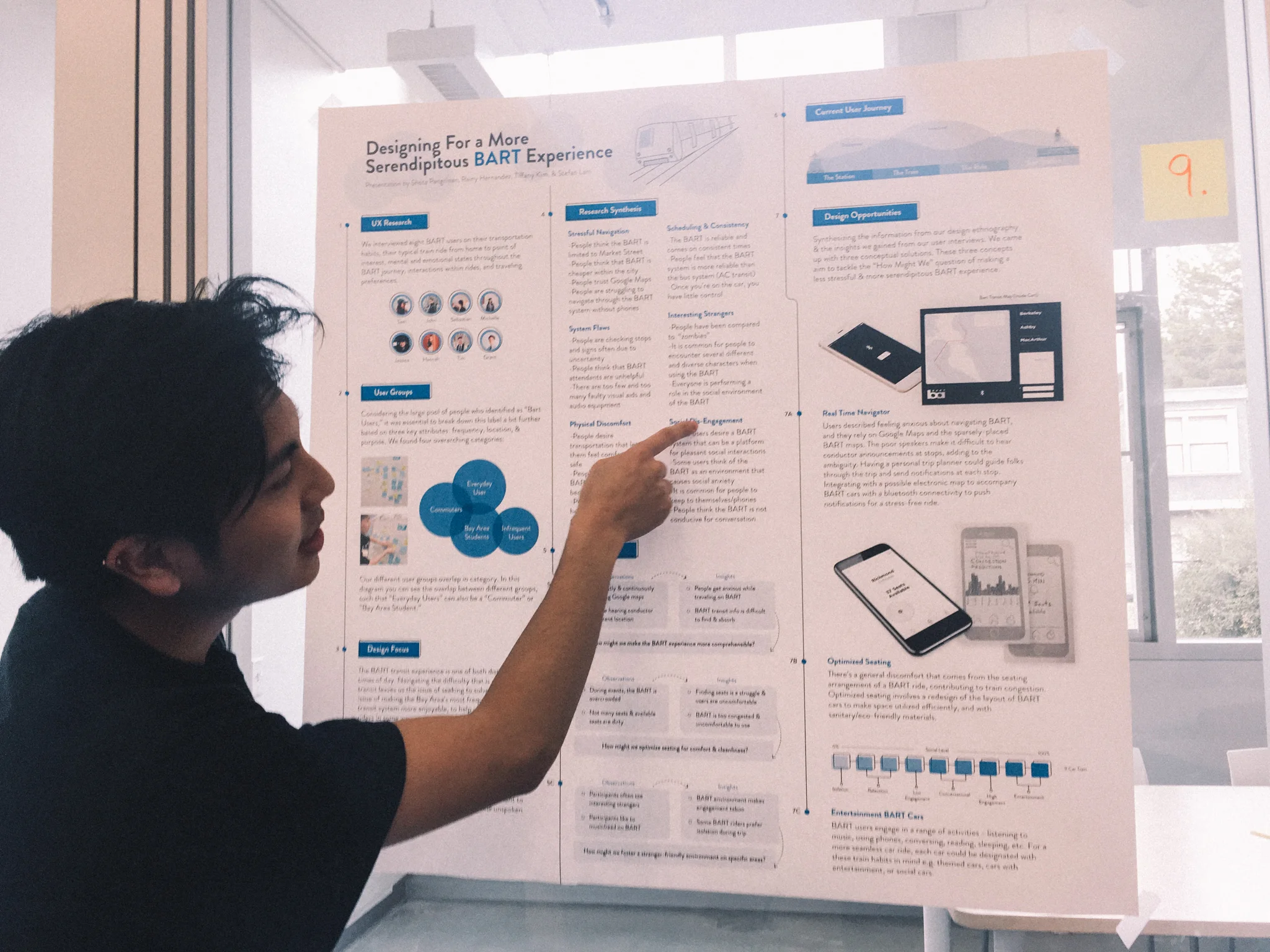
Presentation
Lessons 📔
Designing for archaic systems boasts a lot of systematic & implementation constraints that would impede upon bringing any of these project ideas to full fruition in their current state
Physical systems with mechanical & electrical engineering would be required to have screens, sensors, & connectivity to work properly, which would pose a challenge for real implementation.