UI/UX DES INV 190
Team Members: Sebastian Ospina, Miranda Clemmons, & Patrick Burden
Background
How close is humanity getting to replicating human consciousness & simulating circuits that act like neurons? This is the question we’re being thrown into on a daily basis as we come closer & closer to creating algorithms capable of generating intelligent & self-aware responses. How soon will these digital minds surpass the Turing test? Integrating artificial intelligence is a near reality in modern life, as rapidly occurring implementation makes it's path clearer. It’s up to our own volition in 2017 to decide how we will allow these “others” to be a part of our lives. From online chatbots to smart algorithms to voice responsive systems, robotic forms breach the uncanny valley, & even cinema. AI is taking the forms of everything from enemy, companion, lover, servant, & more. Our project seeks to question the place of Artificial life in the future where human-ness & artificial thought are blurred & transmuted. Human connection is ammended, thoughts & feelings are traversed, & roles in society are questioned.
Cultural Probe & Research
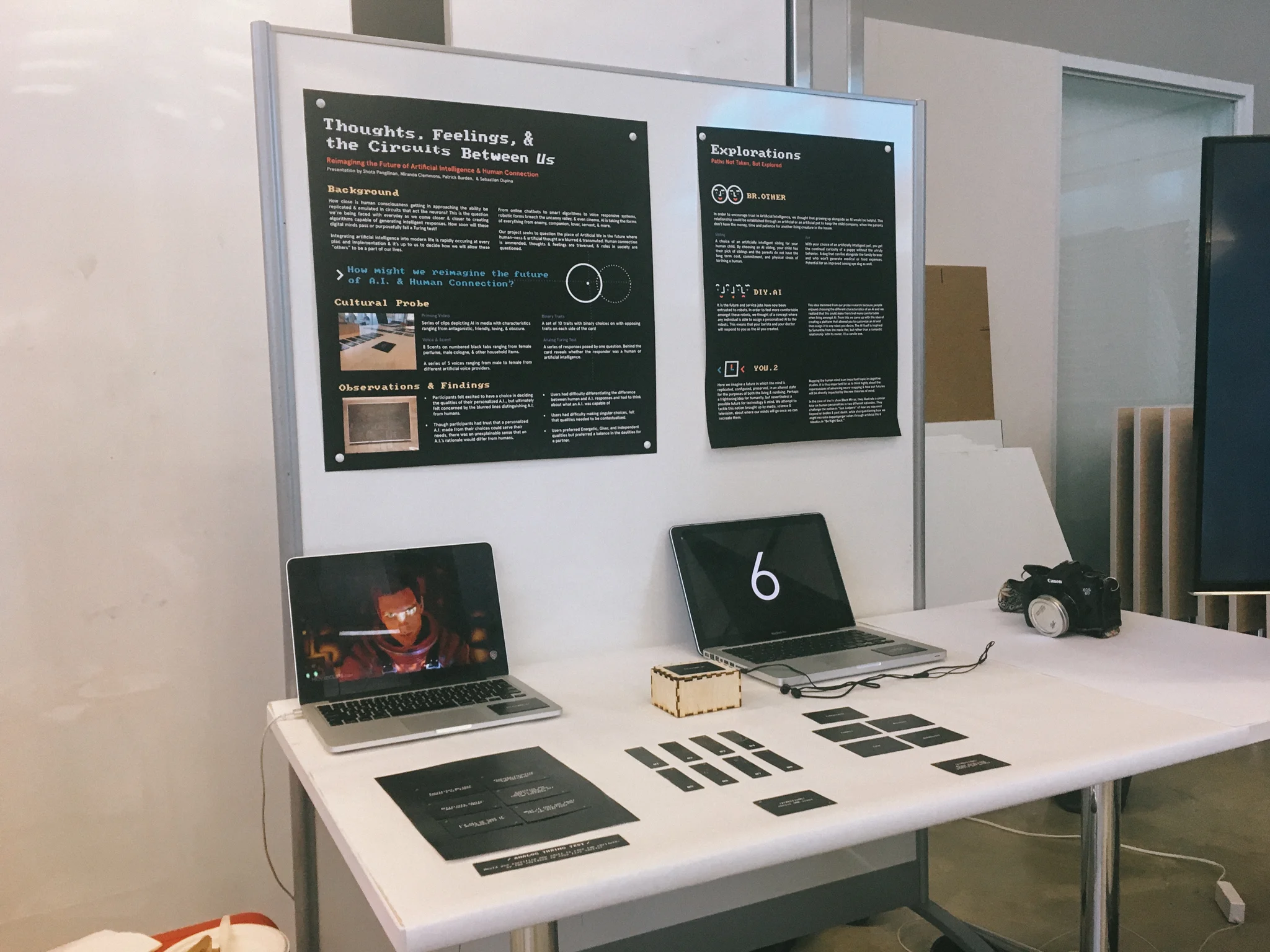
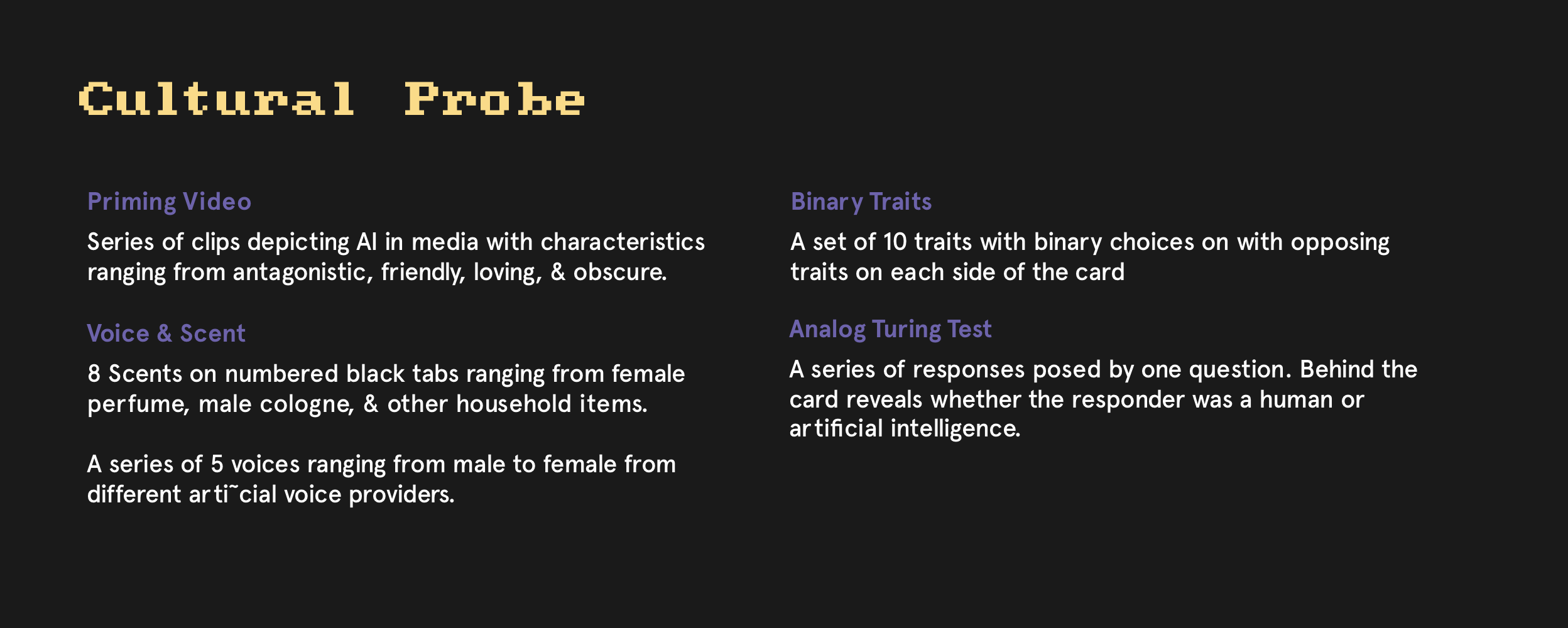
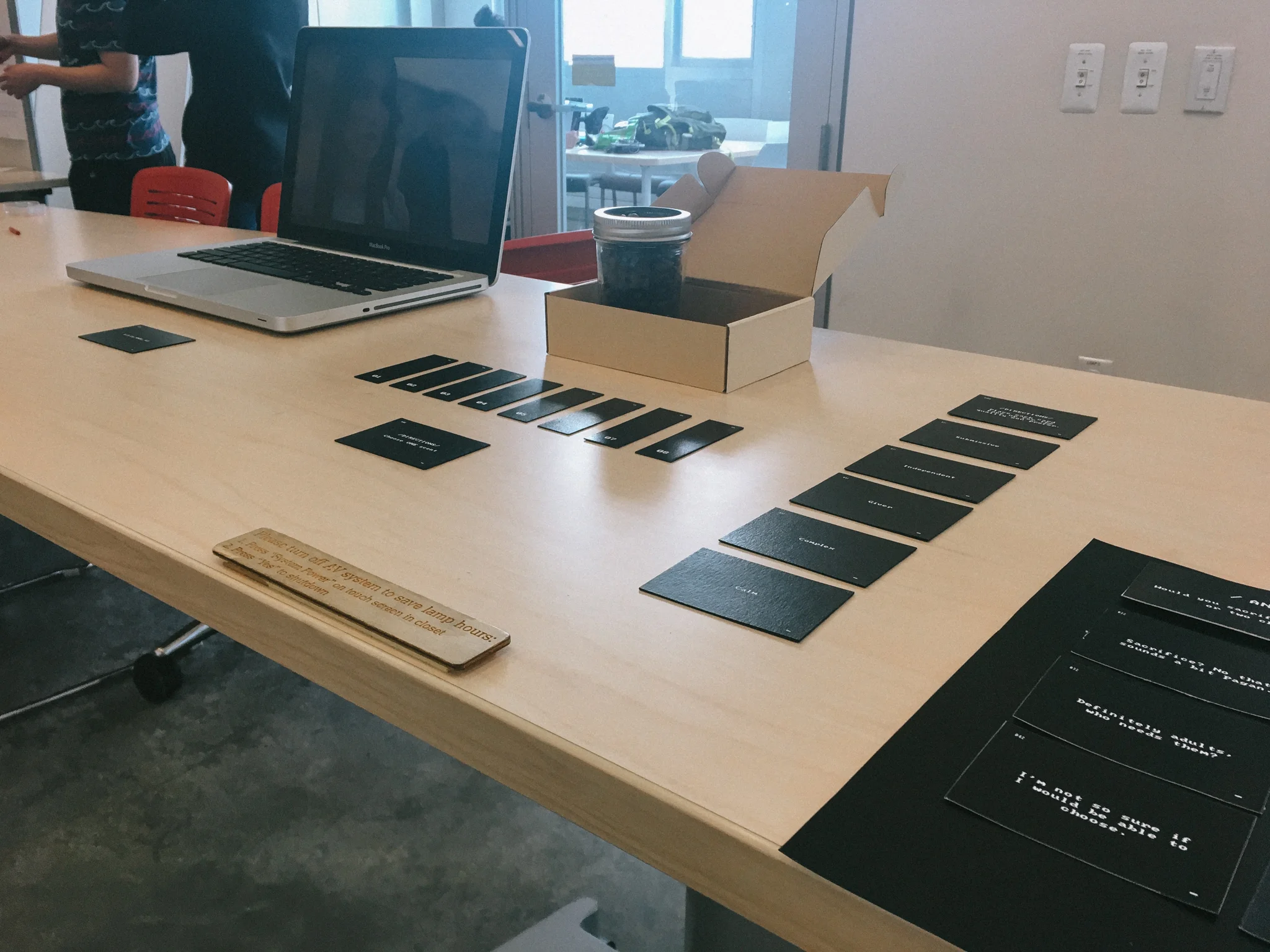
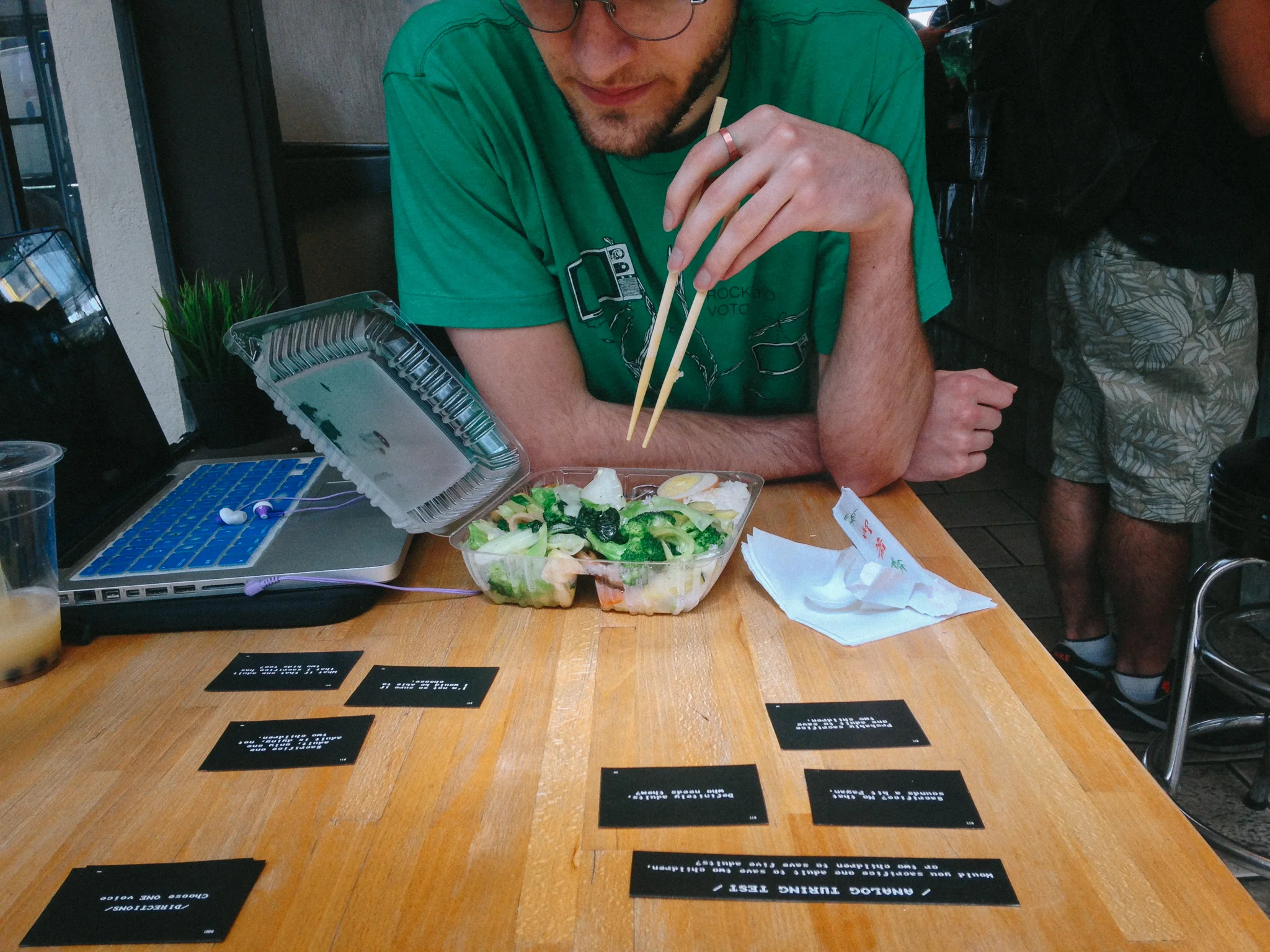
We designed a cultural probe with the intent of evoking our subjects to feel a new characteristics & sense of integration of artificial intelligence into our everyday lives. With a priming video & increased use of sense we tried to put our subjects in the mindset of the future, with greater technological possibilities, while also evoking their different sense of hearing, scent, language & visual.
Takeaways
(1) Participants felt excited to have a choice in deciding the qualities of their personalized A.I., but ultimately felt concerned by the blurred lines distinguishing A.I. from humans.
(2) Though participants had trust that a personalized A.I. made from their choices could serve their needs, there was an unexplainable sense that an A.I.’s rationale would differ from humans.
(3) Users had difficulty differentiating the difference between human and A.I. responses and had to think about what an A.I. was capable of.
(4) Users had difficulty making singular choices, felt that qualities needed to be contextualized.
(5) Users preferred Energetic, Giver, and Independent qualities but preferred a balance in the daulities for a partner.
Concept Generation
Concept Presentation & Critique
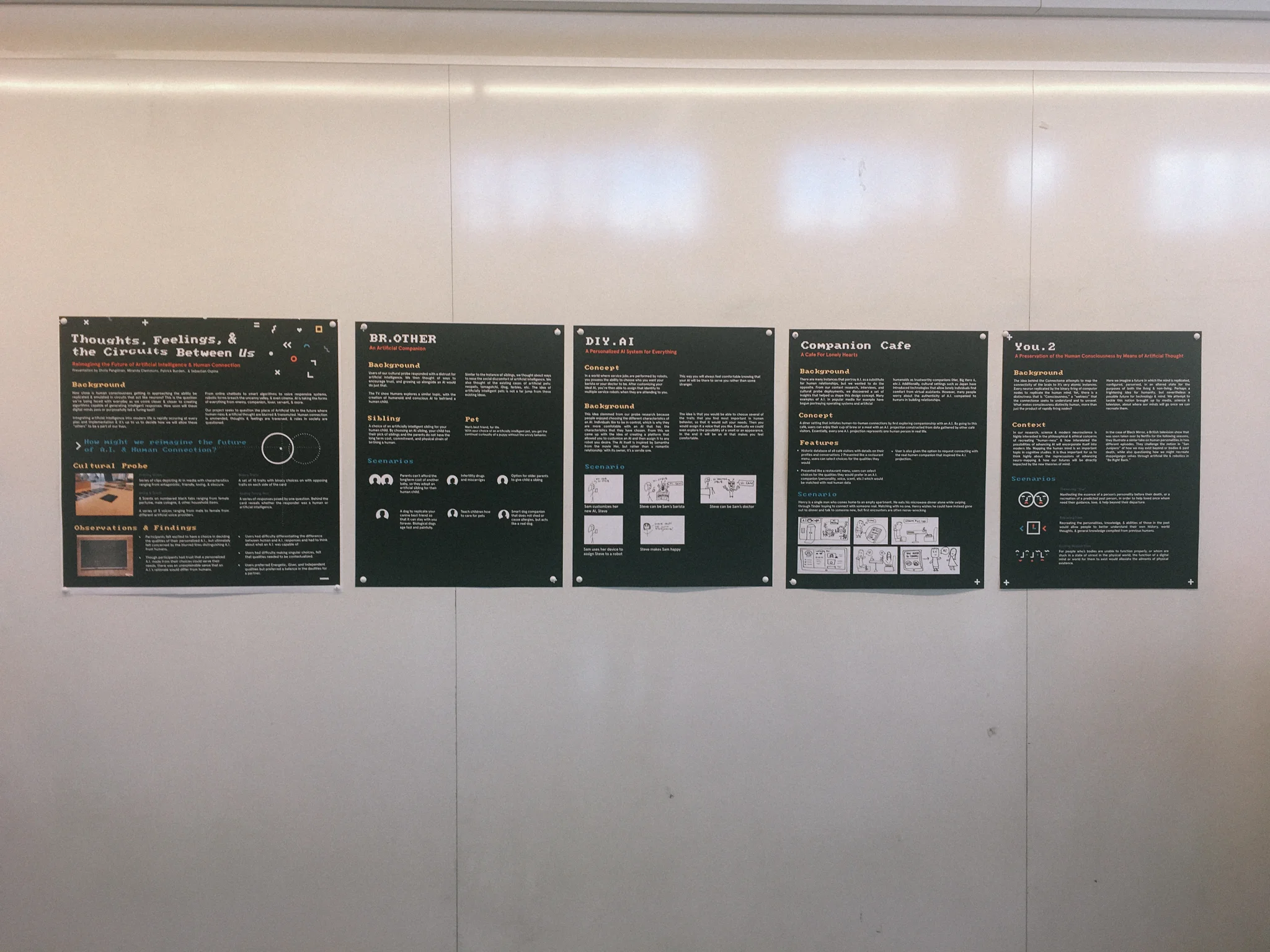
Final Concept & Presentations
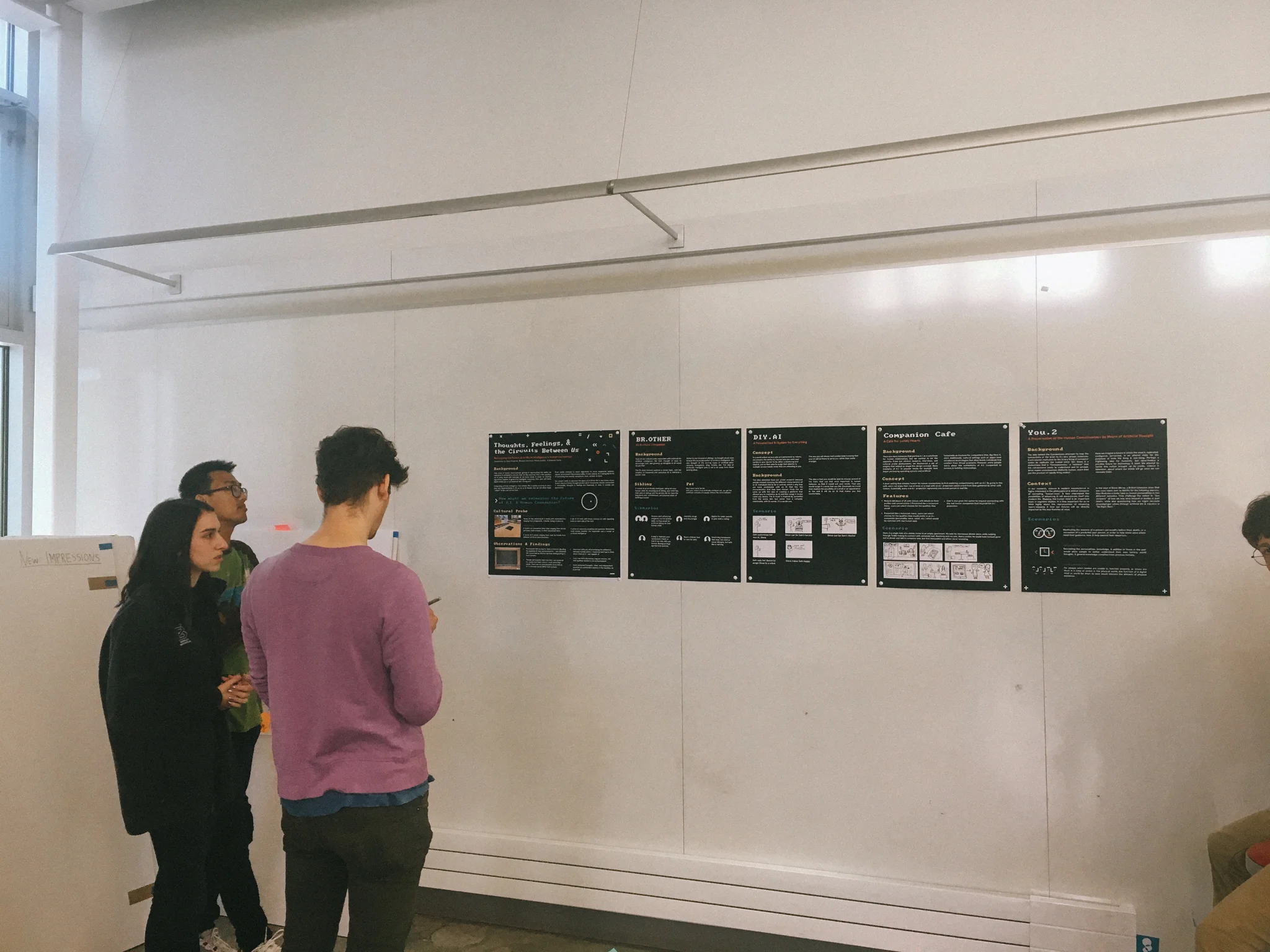
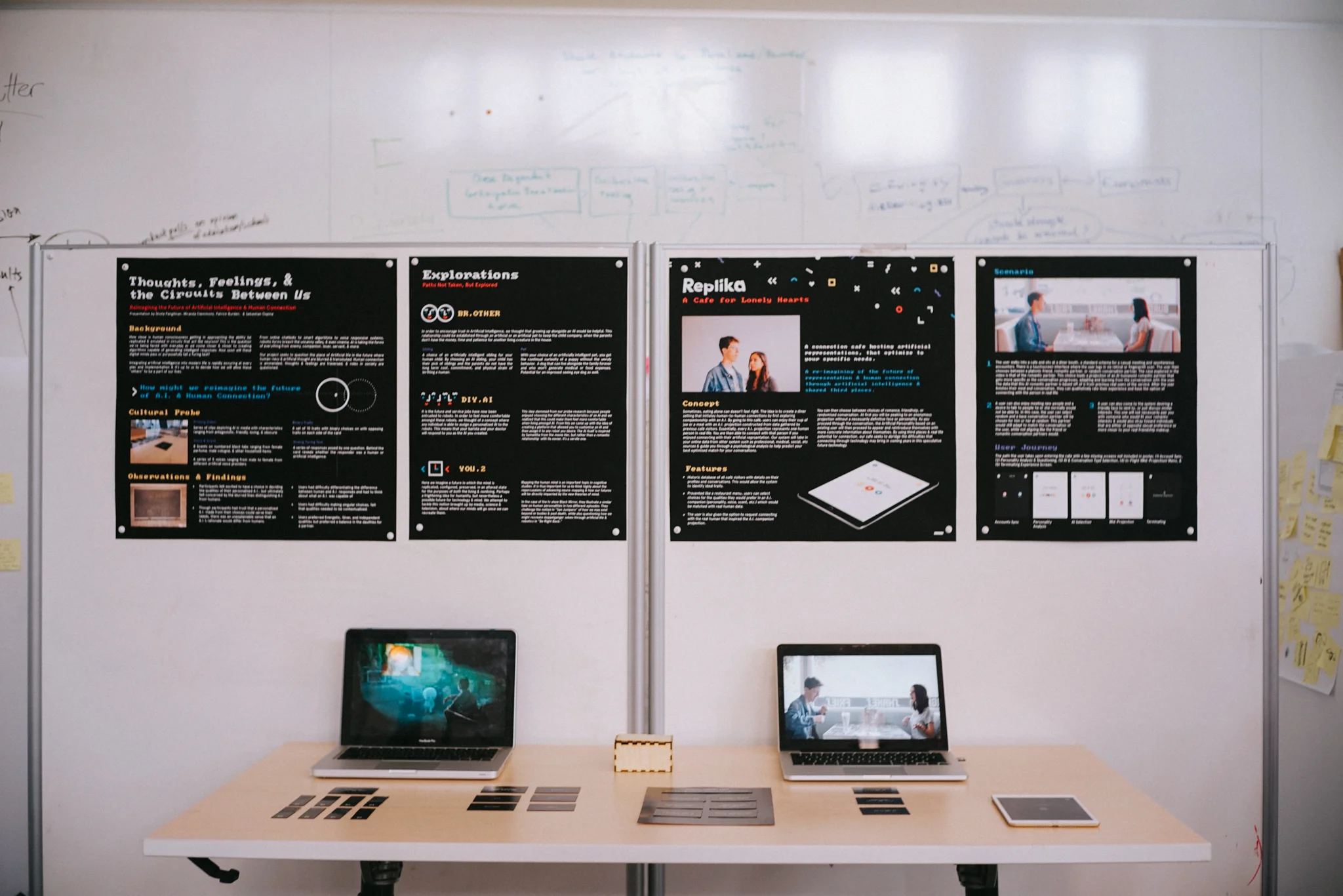
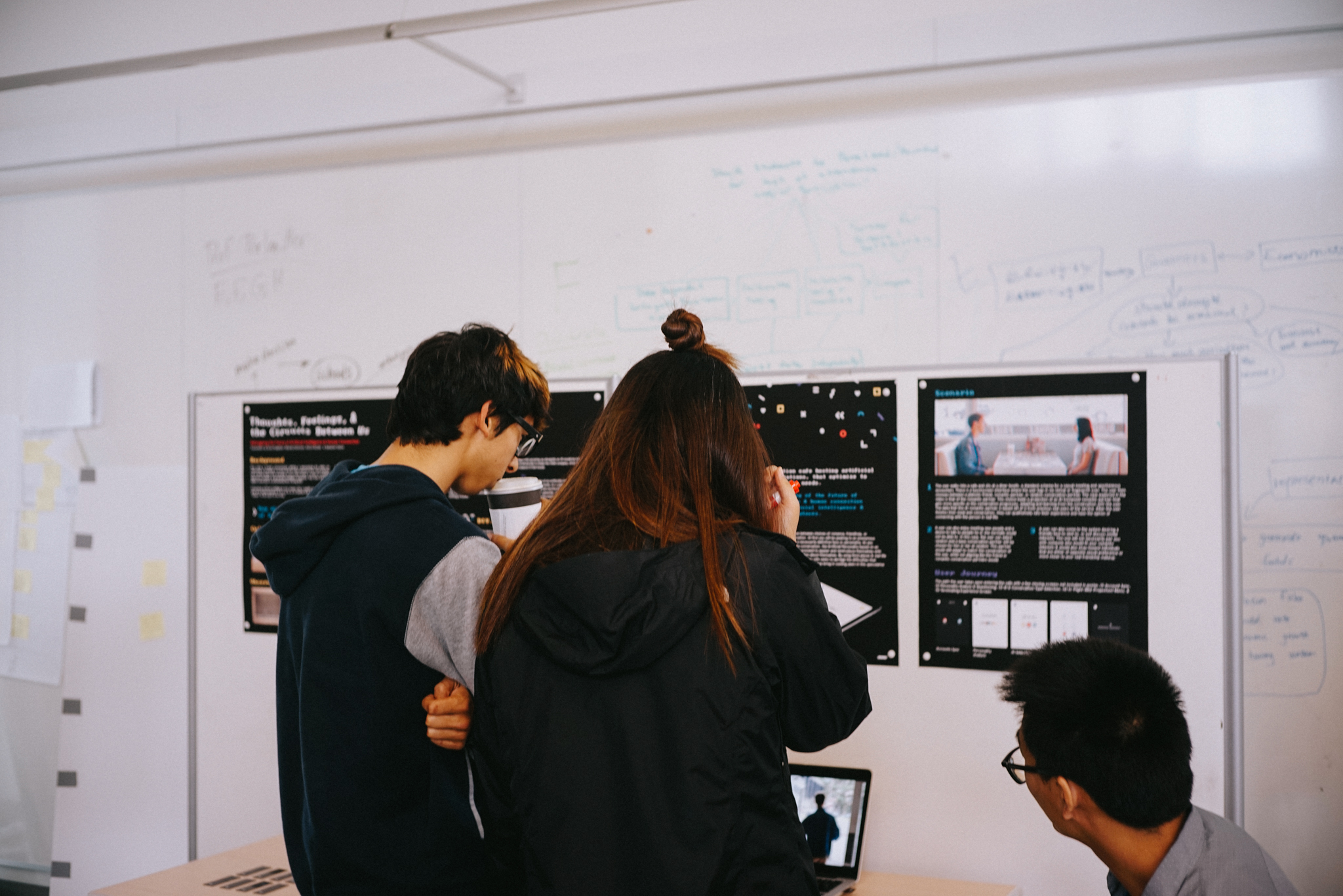
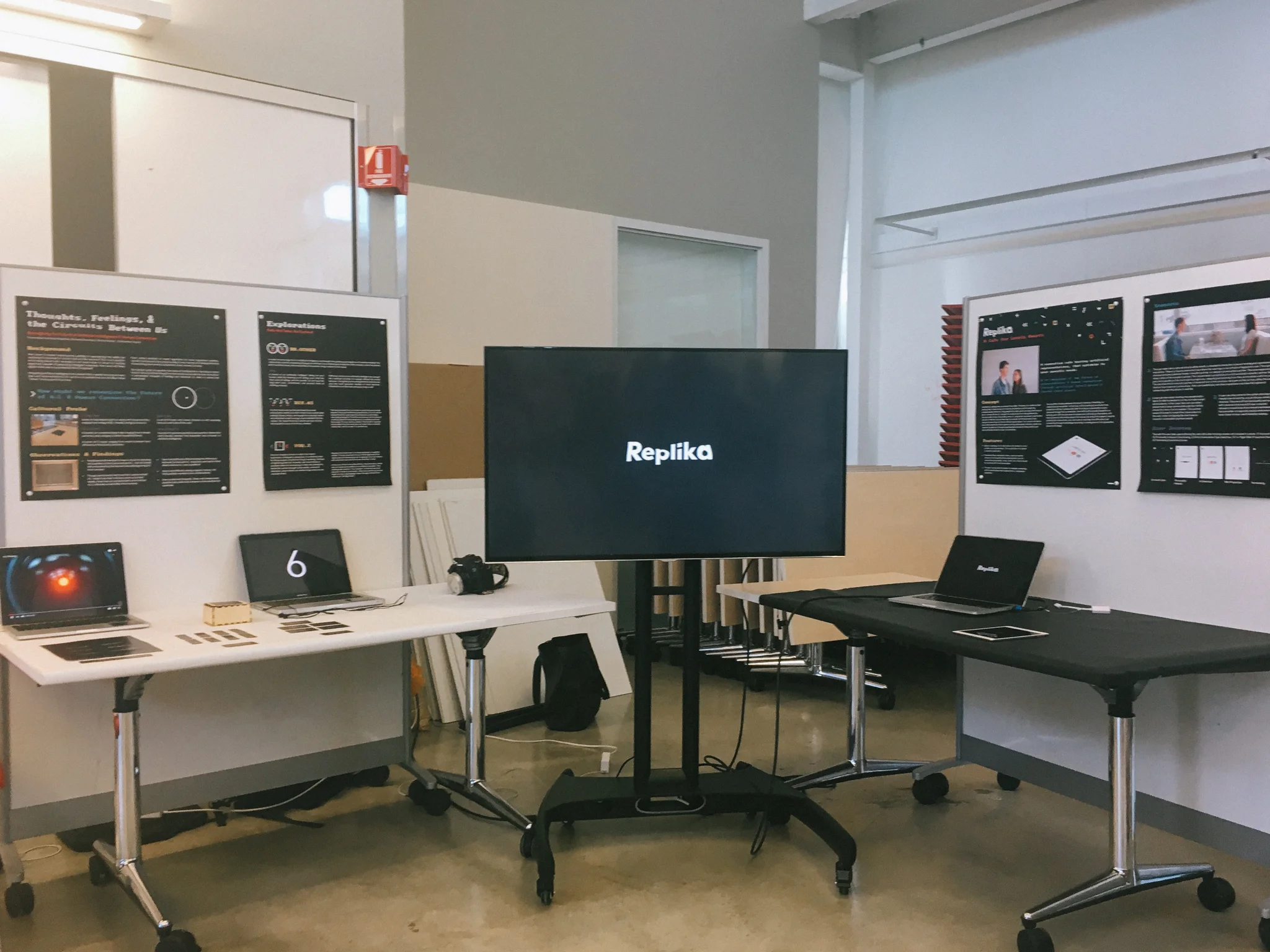
During Jacobs Design Showcase we had series of guest speakers and designers to come to critique and give feedback on our work, including the famed user persona creator Alan Cooper of Cooper Design.
Concept
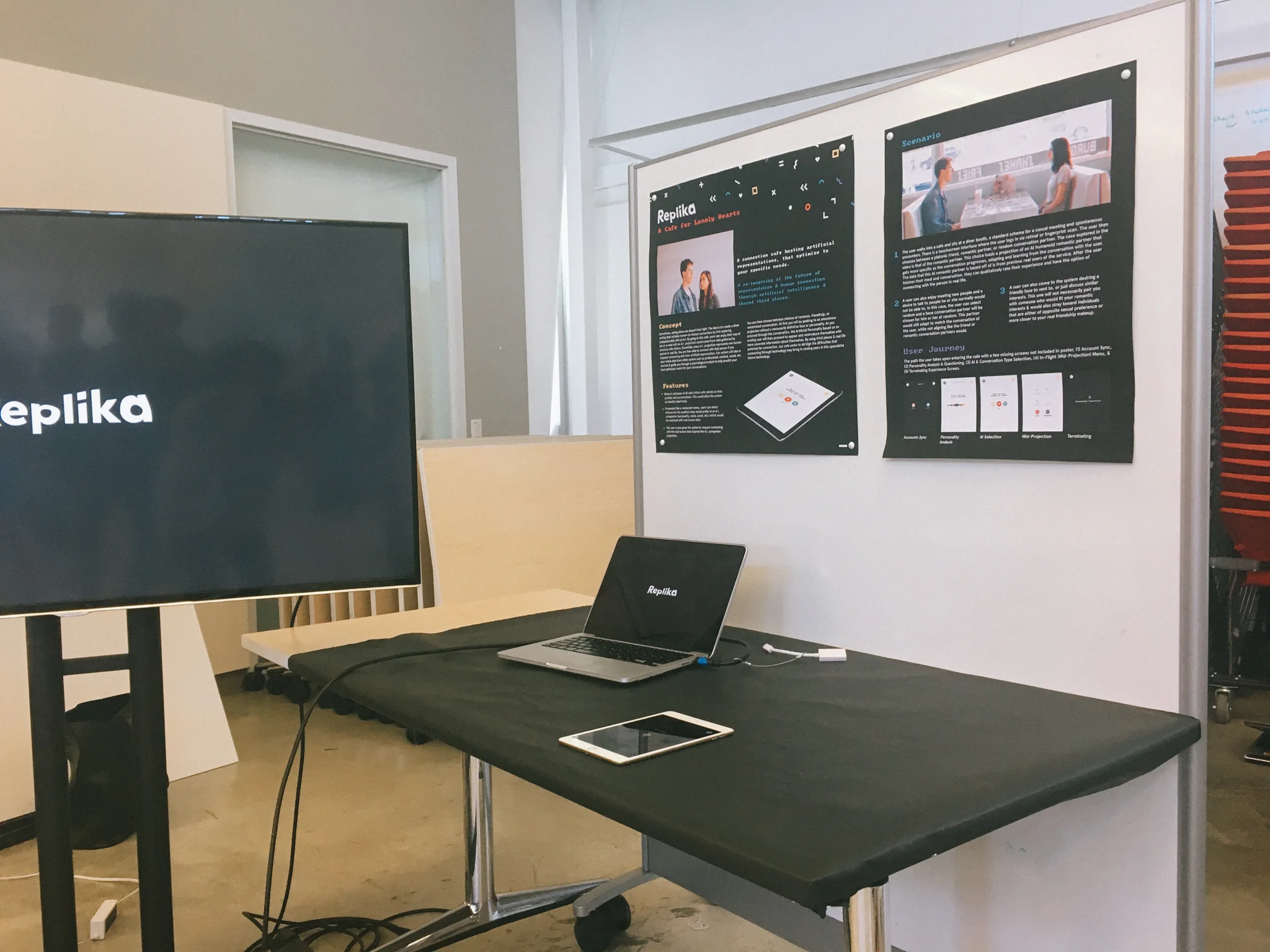
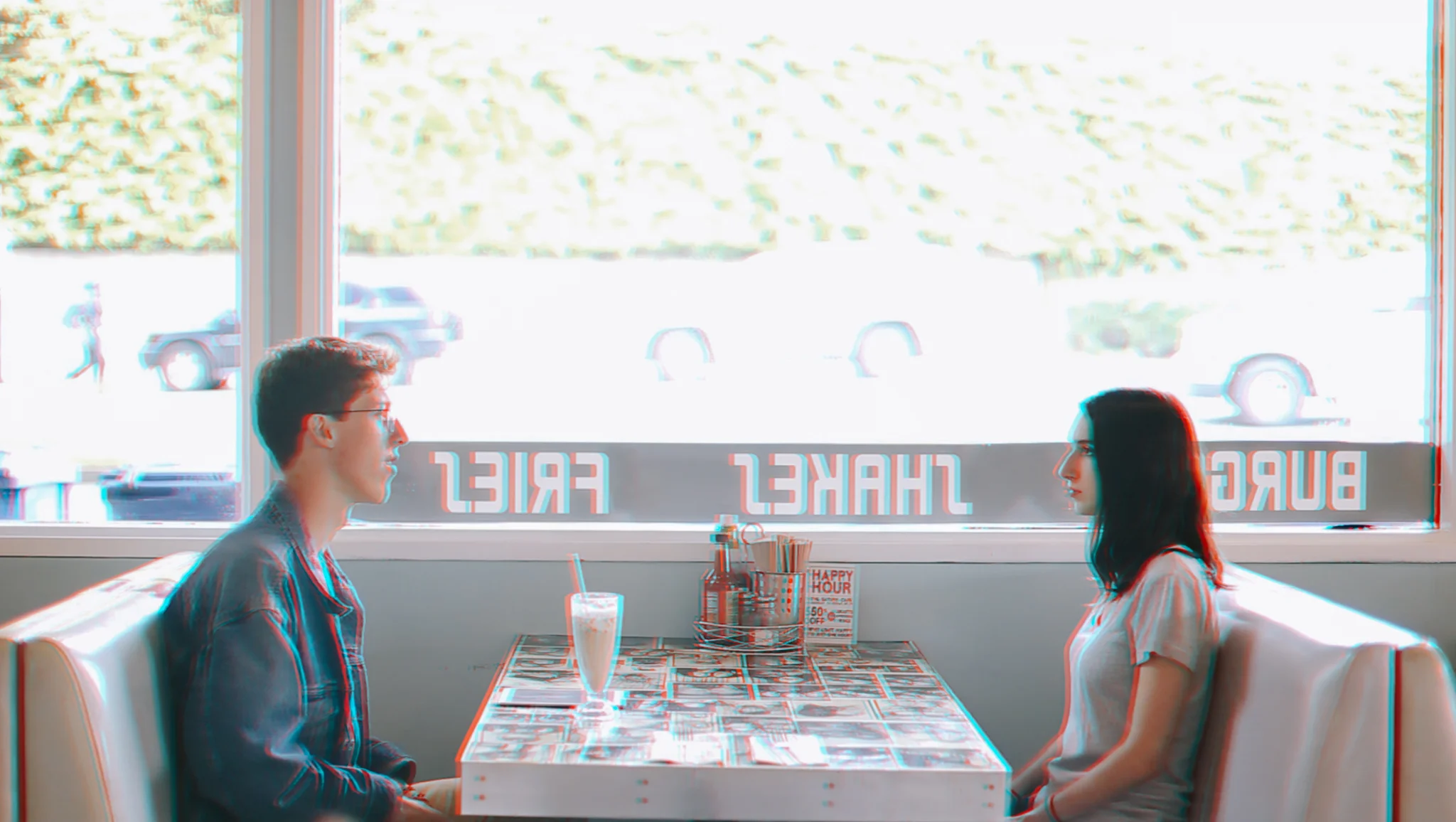
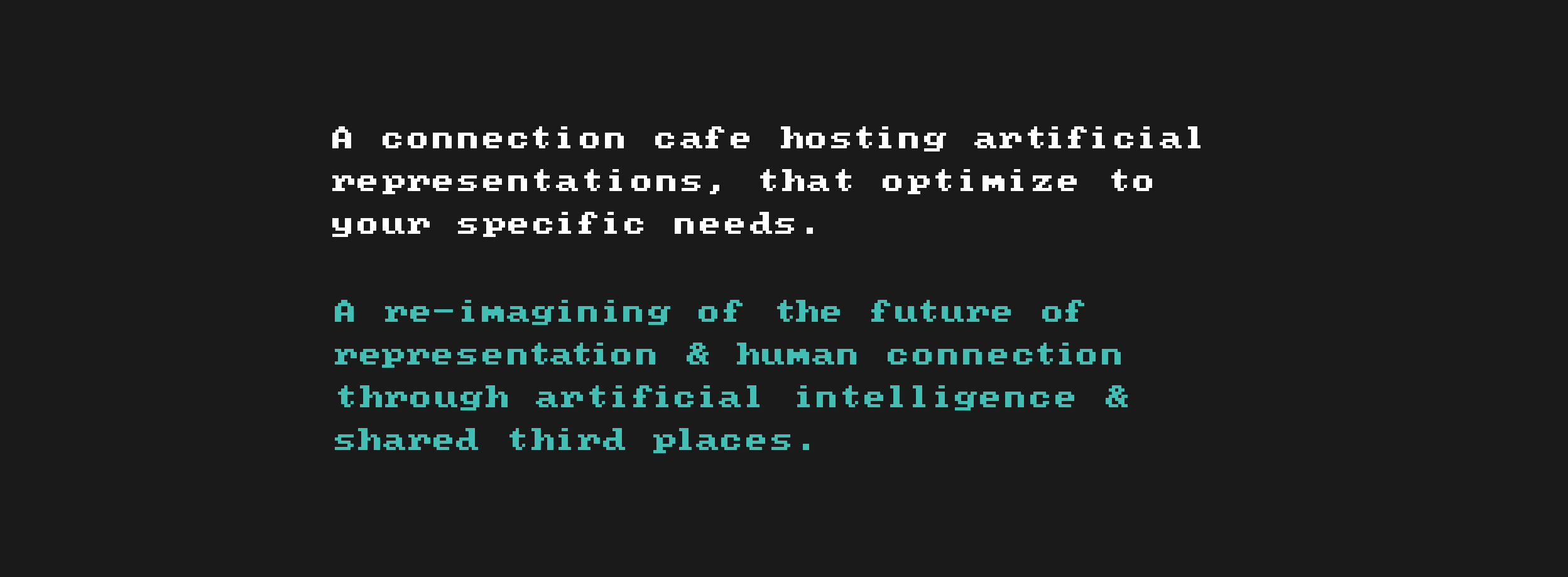
Sometimes, eating alone can doesn’t feel right. The idea is to create a diner setting that initiates human-to-human connections by first exploring companionship with an A.I. By going to this café, users can enjoy their cup of joe or a meal with an A.I. projection constructed from data gathered by previous café visitors. Essentially, every A.I. projection represents one human person in real life. You are then able to connect with that person if you enjoyed connecting with their artificial representation. Our system will take in your online data from other system such as professional, medical, social, etc sources & guide you through a psychological analysis to help predict your best optimized match for your conversations.
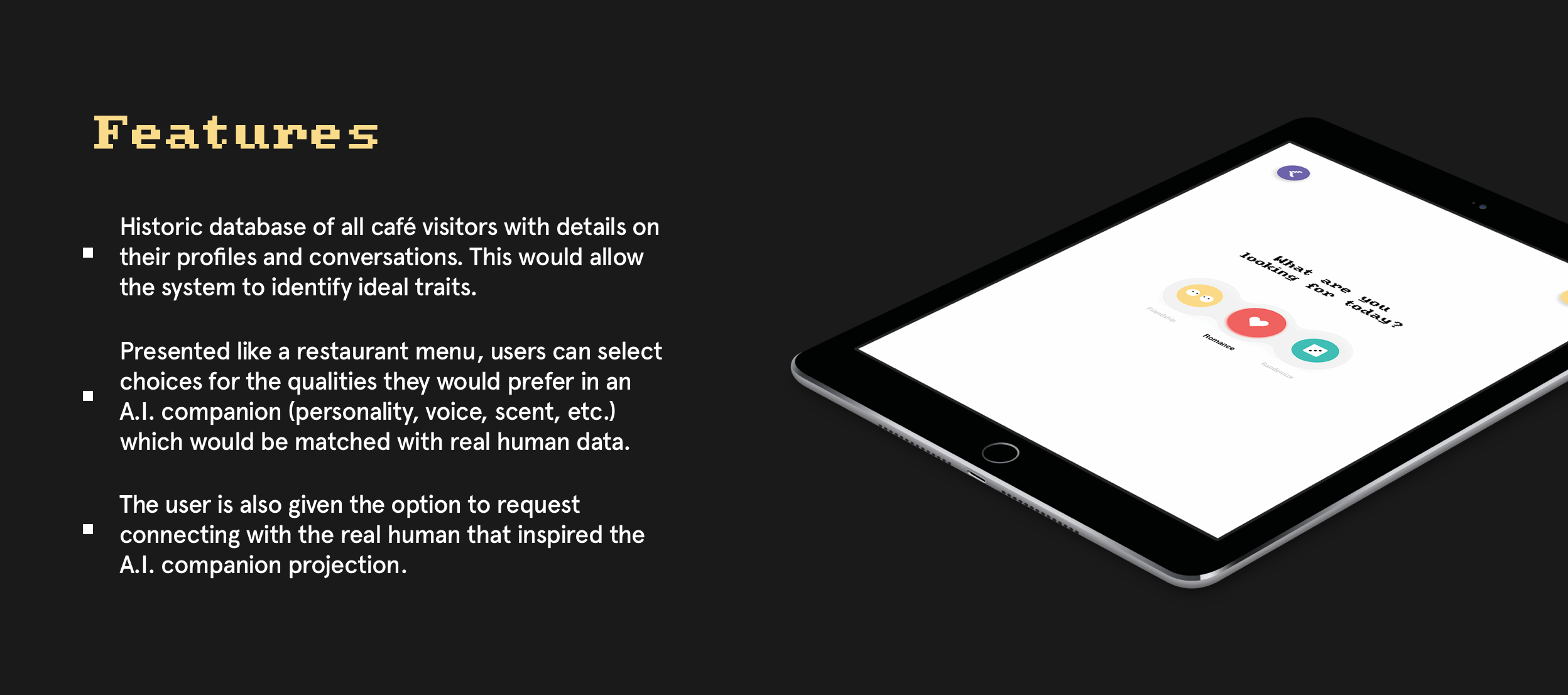
You can then choose between choices of romance, friendship, or randomized conversation. At first you will be peaking to an anonymous projection without a necessarily definitive face or personality. As you proceed through the conversation, the Artificial Personality based on an existing user will then proceed to appear and reintroduce themselves withmore concrete information about themselves. By using third places & real life potential for connection, our cafe seeks to abridge the difficulties that connecting through technology may bring in coming years in this speculative future technology.
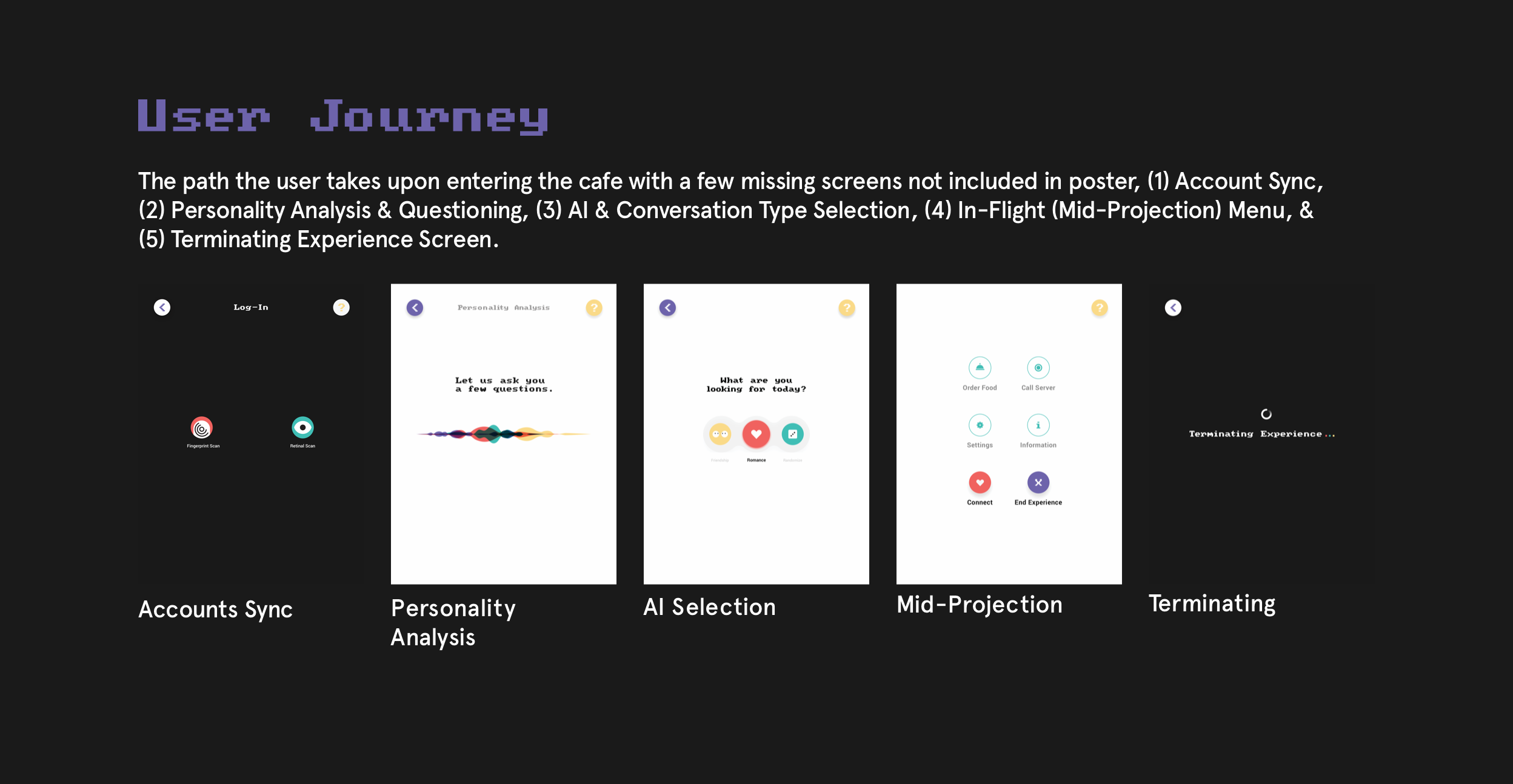
Scenarios
(1) The user walks into a cafe and sits at a diner booth, a standard schema for a casual meeting and spontaneous encounters. There is a touchscreen interface where the user logs in via retinal or fingerprint scan. The user then chooses between a platonic friend, romantic partner, or random conversation partner. The case explored in the video is that of the romantic partner. This choice loads a projection of an AI humanoid romantic partner that gets more specific as the conversation progresses, adapting and learning from the conversation with the user. The data that this AI romantic partner is based off of is from previous real users of the service. After the user finishes their meal and conversation, they can qualitatively rate their experience and have the option of connecting with the person in real life.
(2) A user can also enjoy meeting new people and a desire to talk to people he or she normally would not be able to. In this case, the user can select random and a base conversation partner will be chosen for him or her at random. This partner would still adapt to match the conversation of the user, while not aligning like the friend or romantic conversation partners would.
(3) A user can also come to the system desiring a friendly face to vent to, or just discuss similar interests. This one will not necessarily pair you with someone who would fit your romantic interests & would also stray toward individuals that are either of opposite sexual preference or more closer to your real friendship makeup.

Concept Video

Prototype